 by
Does your child become upset when a puzzle piece refuses to fit, cry when a game does not go their way, or give up as soon as a task becomes difficult? If so, you are not alone. Many children find it hard to cope with disappointment, mistakes, waiting, or unexpected changes. Although these reactions can be challenging for adults, they also provide valuable opportunities to teach children how to handle uncomfortable feelings.
Frustration tolerance is the ability to experience disappointment, difficulty, or delay without immediately giving up, becoming overwhelmed, or reacting in an unhelpful way. However, it does not mean that children should hide their feelings or accept every situation without complaint. Instead, they learn to recognize their emotions, pause before reacting, and choose a constructive next step.
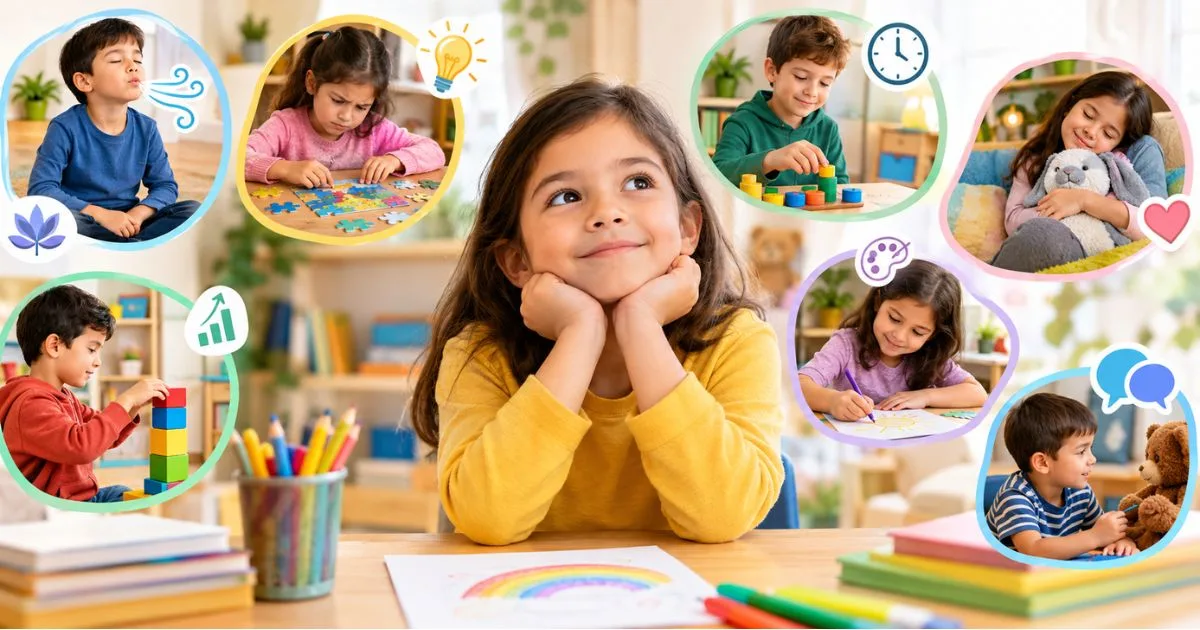
Fortunately, children can develop these skills through small, repeated experiences. For example, a simple building challenge can teach persistence, while a turn-taking game can help a child practice waiting. Similarly, storytelling, movement, sensory play, and everyday household tasks can create opportunities to practice coping skills in a supportive environment.
The following 51 activities offer different ways to help children handle frustration at home, in classrooms, or during play. Choose activities according to your child’s age, interests, communication style, and current abilities. Most importantly, begin with manageable challenges and gradually increase the difficulty as your child becomes more comfortable.
Understanding Low Frustration Tolerance in Children
Low frustration tolerance occurs when a child finds it particularly difficult to cope with situations that feel challenging, disappointing, uncomfortable, or outside their control. For instance, a child may shout when asked to stop playing, abandon homework after making one mistake, or struggle when another child gets the first turn.
These reactions can have different causes. A child might be tired, hungry, overwhelmed by sensory input, worried about making mistakes, or still developing emotional regulation skills. Furthermore, some children need extra support with communication, flexibility, attention, or transitions.
Therefore, the goal is not to eliminate frustration altogether. Instead, help children experience manageable frustration while giving them tools to recover and try again.
Frustration Tolerance Activities for Kids
A. Activities for Recognizing and Understanding Feelings
These first activities help children identify frustration before it becomes too overwhelming. Once children understand what is happening inside their bodies, they can begin choosing helpful responses.
1. Make a Frustration Thermometer
What you need: Paper, crayons, and a marker.
Draw a thermometer with five levels, starting with calm at the bottom and very upset at the top. Next, invite your child to describe what each level feels like. For example, level one might mean relaxed, level three might mean irritated, and level five might mean ready to scream or cry.
Then, discuss what the child can do at each level. At level two, they might ask for help; at level four, they might need a quiet break.
Why it helps: Children begin noticing rising frustration before it becomes difficult to manage.
2. Play the Feelings Detective Game
What you need: Picture cards, storybooks, or everyday situations.
Describe a situation, such as a tower falling just before it is finished. Ask your child to guess what the person might be feeling and explain which clues helped them decide.
Next, discuss whether two children could feel differently in the same situation. One might feel angry, while another might feel disappointed or embarrassed.
Why it helps: It builds emotional vocabulary and helps children recognize feelings without judging them.
3. Draw Where Frustration Lives in the Body
What you need: Paper and colored pencils.
Ask your child to draw an outline of a person. Then, talk about physical signs of frustration, such as tight fists, a warm face, a fast heartbeat, tense shoulders, or a tummy that feels uncomfortable.
Invite your child to color the areas where they notice these sensations.
Why it helps: Recognizing body signals can help children identify frustration earlier and respond before their emotions intensify.
What you need: Paper, markers, and optional pictures.
Together, make a menu of calming choices. Include ideas such as squeezing a cushion, asking for assistance, drawing, taking a short walk, drinking water, or sitting in a quieter space.
Afterward, let your child decorate the menu and keep it somewhere accessible.
Why it helps: When frustration makes thinking difficult, children can use a prepared list rather than trying to invent a solution in the moment.
5. Read and Discuss Frustrating Stories
What you need: Children’s storybooks or a short story you create together.
Choose a story in which a character makes mistakes, faces disappointment, or struggles to learn something new. Pause at important moments and ask, “What do you think the character is feeling?” and “What could they try next?”
Finally, connect the story to a familiar, low-pressure situation in your child’s life.
Why it helps: Stories provide a safe way to explore difficult emotions and alternative responses.
6. Practice Naming the Feeling
What you need: No special materials.
When your child becomes upset, gently offer possible words for the feeling. For example, say, “You worked hard on that drawing, and now it has torn. You seem disappointed.”
Then allow your child to agree, disagree, or choose another word.
Why it helps: Naming emotions can help children communicate their needs instead of relying only on crying, shouting, or withdrawing.
7. Keep a Frustration Journal
What you need: A notebook or a few sheets of paper.
At the end of the day, ask your child to recall one moment that felt difficult. Record what happened, how they felt, what they did, and what they might try next time.
For younger children, use drawings, stickers, or simple choices instead of written answers.
Why it helps: Over time, children can notice patterns and recognize which coping strategies work best for them.
B. Calming and Emotional Regulation Activities
Recognizing frustration is only the beginning. Therefore, the next group focuses on helping children settle their bodies and minds so they can respond more thoughtfully.
8. Blow Imaginary Birthday Candles
What you need: Nothing.
Ask your child to imagine five birthday candles in front of them. Have them breathe in gently and then blow out the imaginary candles with a slow, controlled exhale.
Repeat a few times without forcing deep breaths.
Why it helps: A gentle, extended exhale can help some children slow down and redirect their attention when they feel upset.
9. Practice Balloon Breathing
What you need: Nothing, although a balloon picture can help.
Invite your child to imagine that their tummy is a balloon. As they breathe in comfortably, the balloon expands; as they breathe out, it becomes smaller.
Practice while calm so the technique feels familiar when frustration appears.
Why it helps: It gives children a simple, concrete way to practice steady breathing.
10. Build a Calm-Down Box
What you need: A small box and safe calming items.
Fill the box with items your child finds comforting, such as a soft toy, paper for drawing, a textured fabric square, a favorite picture, or a small fidget.
Next, explain that the box is an optional tool for taking a break, not a punishment for misbehaving.
Why it helps: Children have easy access to familiar objects that may help them regain a sense of control.
11. Try Five-Finger Breathing
What you need: Nothing.
Ask your child to spread one hand like a star. With the index finger of the other hand, slowly trace up one finger while breathing in and down while breathing out.
Continue around the hand at a comfortable pace.
Why it helps: Combining a simple hand movement with breathing gives children something concrete to focus on.
12. Play the Freeze-and-Relax Game
What you need: Nothing.
Invite your child to tense their hands gently for a moment and then relax them. Repeat with the shoulders, face, and legs, using comfortable movements.
Turn it into a game by alternating between a “stiff robot” and a “relaxed rag doll.”
Why it helps: Children practice noticing the difference between tension and relaxation.
13. Create a Quiet Corner
What you need: A comfortable, low-stimulation area.
Set up a small space with cushions, books, soft lighting, or other calming objects your child enjoys. Let them help decide what belongs there.
Explain that anyone can use the corner when they need a break, and that they can return to an activity when ready.
Why it helps: A predictable place to decompress can be especially useful when noise, activity, or demands become overwhelming.
14. Shake, Stretch, and Reset
What you need: A little open space.
Ask your child to shake their hands gently, stretch their arms, roll their shoulders, or march slowly in place. Finish with a comfortable breath and a question such as, “Are you ready to try again, or do you need more time?”
Why it helps: Gentle movement offers an alternative to remaining stuck in an escalating emotional state.
15. Listen to a Calming Sound
What you need: Optional recordings of rain, birds, gentle music, or other preferred sounds.
Invite your child to sit comfortably and listen for one or two minutes. Ask them to notice a sound that is loud, soft, near, or far away.
Why it helps: Focusing on predictable sounds may help some children shift their attention away from a frustrating situation.
16. Use a Five-Senses Grounding Game
What you need: Everyday objects.
Invite your child to identify things they can see, hear, and feel. If appropriate, they can also notice a familiar smell or taste.
Keep the activity flexible. Children who find certain sensory experiences uncomfortable can skip those parts.
Why it helps: Grounding directs attention toward the present environment rather than the upsetting event.
C. Patience and Waiting Activities
Waiting can feel especially difficult when children want an immediate answer, toy, snack, or turn. Nevertheless, patience can be practiced in small, achievable steps.
17. Grow a Waiting Jar
What you need: A clear jar, large counters, and a container.
Choose a short, realistic waiting period. During that time, your child can place one counter into the jar at a chosen interval or after completing a small waiting step.
Gradually increase the challenge only when the child is comfortable. Avoid using food or essential needs as rewards for waiting.
Why it helps: A visible representation of progress makes waiting more understandable.
18. Play the Red Light, Green Light Game
What you need: Open space.
One person calls “green light” to invite movement and “red light” to signal stopping. Add “yellow light” for slow movement if your child enjoys extra challenges.
Take turns being the caller so the child also practices controlling the pace of the game.
Why it helps: Children practice stopping an enjoyable action and following a changing instruction.
19. Take Turns with a Favorite Game
What you need: A simple board game, building toy, or ball.
Choose a game with clearly defined turns. Before starting, agree on how each person will know when their turn begins and ends.
Praise specific actions such as waiting, handing over a piece, or asking politely for the next turn.
Why it helps: Children practice delayed gratification while learning that other people have needs and turns too.
20. Play the Mystery Timer Game
What you need: A timer.
Set a short, visible timer for a routine activity, such as waiting before opening a box of art supplies. Explain what will happen when the timer ends.
Begin with a few seconds if waiting is particularly challenging, and extend the time gradually.
Why it helps: A predictable endpoint can make waiting feel more manageable than an indefinite instruction.
21. Take Turns Being the Leader
What you need: No materials.
One person chooses a simple action, such as clapping, walking like a penguin, or touching their toes. The other person follows. Afterward, switch roles.
If your child struggles to let another person lead, start with a short turn and offer a reminder before switching.
Why it helps: The activity teaches flexibility, shared control, and tolerance when someone else makes the decisions.
22. Practice Waiting for a Small Surprise
What you need: A harmless surprise, such as a drawing or a wrapped paper craft.
Tell your child that a small surprise will be available after a brief, agreed-upon activity. Make sure the delay is reasonable and that you follow through.
For children who find uncertainty stressful, explain exactly when the surprise will be available rather than keeping them guessing.
Why it helps: Children experience a manageable delay while learning to trust predictable routines.
23. Play the Slow-Motion Challenge
What you need: An open area.
Ask your child to complete a familiar movement in slow motion, such as walking across the room, stacking blocks, or moving a toy car along a path.
Make the activity playful rather than demanding perfect control.
Why it helps: Children practice slowing down an impulse and sustaining attention.
24. Make a Turn-Taking Story
What you need: Nothing.
Start a story with one sentence, such as, “A little rabbit found a mysterious box.” Then let your child add the next sentence. Continue alternating turns until you reach an ending.
Why it helps: Children learn to wait while someone else contributes and to accept ideas that differ from their own.
25. Plan a Small Delayed Reward
What you need: A simple activity or privilege your child already enjoys.
Agree on a short, realistic sequence, such as finishing one manageable household task before choosing a family game. Explain the sequence in advance.
Make sure the task is appropriate for the child’s abilities and do not use this approach to withhold affection, meals, rest, or other basic needs.
Why it helps: Children practice working toward a clear, attainable goal without expecting every preference to be met immediately.
D. Problem-Solving and Persistence Activities
When a task becomes difficult, some children immediately seek an answer, while others abandon the activity altogether. The following ideas help children discover that problems can have more than one solution.
26. Build a Tower That Falls on Purpose
What you need: Building blocks or plastic cups.
Invite your child to build a small tower. Once it is complete, gently knock it down together and discuss what happened.
Next, experiment with a wider base, different materials, or a new arrangement.
Why it helps: The child learns that a setback can lead to experimentation instead of ending the activity.
27. Complete a Puzzle with a Missing Piece
What you need: An age-appropriate puzzle and one temporarily removed piece.
Let your child work on the puzzle while you keep the final piece nearby. When they notice it is missing, ask what they could do next.
Allow them to inspect the surrounding shapes or ask for help before returning the piece.
Why it helps: The child practices tolerating a small obstacle and identifying a solution.
Important: Keep the challenge brief and return the piece if it causes distress. The purpose is problem-solving, not deliberately provoking a meltdown.
28. Try Three Ways to Solve One Problem
What you need: A familiar everyday challenge.
Choose a simple problem, such as reaching a toy on a low shelf or making a paper bridge stand upright. Ask your child to suggest three possible approaches before choosing one.
If generating ideas is difficult, offer two choices and invite them to invent another.
Why it helps: Children learn that the first solution is not always the only solution.
29. Make a Paper Bridge
What you need: Paper, two books, and lightweight objects such as large blocks.
Place a sheet of paper between two books and test whether it can support a lightweight object. Then fold the paper in different ways and test again.
Encourage your child to predict what might happen before each attempt.
Why it helps: Failed experiments become useful information rather than proof that the child cannot succeed.
30. Follow a Picture Instruction Challenge
What you need: Picture instructions for building blocks, drawing, or a simple craft.
Choose an activity with a few manageable steps. Invite your child to follow the pictures, checking each step as they go.
If something does not work, encourage them to identify the step that needs changing rather than starting over automatically.
Why it helps: Children practice staying with a task and correcting mistakes in an organized way.
31. Solve a Toy Rescue Mission
What you need: A toy, cushions, and a few safe obstacles.
Place a toy in a simple pretend obstacle course. Ask your child to work out how to move it to safety without knocking over the obstacles.
Let them test different strategies and revise their plan.
Why it helps: Pretend play turns problem-solving and persistence into an enjoyable challenge.
32. Play the What-Else-Could-Work Game
What you need: Nothing.
Describe an ordinary problem, such as a crayon breaking or a paper airplane failing to fly. Ask, “What else could work?”
Take turns suggesting possibilities, including funny answers, before discussing which solutions are practical.
Why it helps: Children become more flexible when their first idea does not work.
33. Make a Mistake-Friendly Drawing
What you need: Paper, crayons, and markers.
Invite your child to draw something imaginative without aiming for perfection. If a line goes wrong, encourage them to turn it into something new, such as a cloud, a funny creature, or part of a pattern.
Avoid correcting every detail.
Why it helps: Children practice responding to mistakes with creativity rather than harsh self-criticism.
34. Complete a Multi-Step Treasure Hunt
What you need: Simple clues or picture cards.
Create a short treasure hunt with three or four steps. For example, the first clue might lead to a bookshelf, the second to a cushion, and the third to a toy box.
If a clue is confusing, help your child break it into smaller parts instead of immediately giving the answer.
Why it helps: The activity encourages persistence through a sequence of small challenges.
35. Invent a New Use for an Ordinary Object
What you need: Safe household objects, such as cardboard tubes, paper, and large blocks.
Choose an object and brainstorm alternative uses. A cardboard tube could become a tunnel, a telescope for pretend play, or a bridge support.
Then select one idea and build it together.
Why it helps: Children learn to explore alternatives instead of becoming stuck when their original plan fails.
36. Play a Cooperative Building Game
What you need: Blocks, magnetic tiles, or other suitable construction materials.
Work together to build a house, vehicle, or imaginary town. Give each person a different role, such as choosing shapes, placing pieces, or checking stability.
When ideas conflict, pause and test both suggestions where possible.
Why it helps: Children practice negotiating, adapting plans, and recovering when collaboration becomes difficult.
E. Flexibility and Coping with Disappointment
Children cannot control every outcome. Consequently, learning to adapt when plans change is an important part of frustration tolerance.
37. Play Plan A and Plan B
What you need: A simple activity plan.
Choose an ordinary situation, such as going to the park. Together, make a Plan A for sunny weather and a Plan B for rain.
Discuss how both plans can still include something enjoyable, even though they look different.
Why it helps: Children practice preparing for changes without assuming that a different outcome means the entire day is ruined.
38. Change One Rule in a Familiar Game
What you need: A familiar game.
Play the game normally for a few minutes. Then introduce one small, agreed-upon change, such as moving backward instead of forward on one turn.
Explain the change clearly and allow your child to decide whether they are ready to try it.
Why it helps: The child experiences manageable uncertainty and practices adapting to a new expectation.
39. Create a Flexible Thinking Story
What you need: Paper or a short spoken story.
Describe a character whose original plan does not work. For example, a child plans to paint a picture, but the favorite color has run out.
Ask your child to imagine several ways the character could continue, such as mixing colors, choosing another shade, or changing the picture.
Why it helps: Children practice shifting from disappointment toward possible alternatives.
40. Play the Unexpected Object Game
What you need: A small collection of safe, familiar objects.
Place several objects in a bag. Take one out and invent a pretend use for it. Then invite your child to invent a different use.
For example, a large spoon might become a microphone or a magic wand.
Why it helps: The game encourages flexible thinking and reduces the pressure to find only one correct answer.
41. Practice Losing a Game Kindly
What you need: A short, age-appropriate game.
Choose a game that finishes quickly. Before playing, practice phrases such as, “Good game,” “I wanted to win, but I can try again,” and “Let’s play another round.”
If your child loses and becomes upset, acknowledge the disappointment and give them time to recover. Do not force them to pretend they are happy.
Why it helps: Children learn that losing can feel unpleasant without making the experience unbearable or defining their worth.
42. Make a Change-of-Plans Calendar
What you need: A simple calendar or visual schedule.
Create a daily schedule using pictures or words. When a change is necessary, explain it as early as possible and mark the new plan clearly.
Where appropriate, offer a small choice, such as reading indoors or doing a craft when outdoor play is canceled.
Why it helps: Advance notice and visual information can make transitions more manageable.
43. Practice the “Not Yet” Mindset
What you need: A skill your child is learning, such as tying shoelaces, drawing shapes, or completing a simple puzzle.
When your child says, “I can’t do it,” respond with, “You can’t do it yet. Let’s choose one small part to practice.”
Break the skill into steps and celebrate effort, strategy, and improvement rather than demanding immediate success.
Why it helps: Children begin to view ability as something they can develop through practice and support.
44. Play the Two-Choice Challenge
What you need: Two acceptable options for an activity.
Offer your child two manageable ways to approach a task. For instance, they can start homework with reading or mathematics, or choose whether to organize crayons before or after paper.
Keep the essential expectation consistent while allowing flexibility in how it is completed.
Why it helps: Appropriate choices provide a sense of control without requiring the child to control every part of a situation.
F. Everyday Activities for Practicing Frustration Tolerance
Finally, everyday routines provide natural opportunities to practice patience, communication, and recovery. These activities do not require a special lesson or a long preparation period.
45. Cook a Simple Recipe Together
What you need: A child-safe recipe, ingredients, and suitable utensils.
Choose an easy recipe, such as fruit salad or a simple sandwich. Invite your child to follow the steps, wait while ingredients are prepared, and cope with small imperfections.
If a piece of fruit falls or the mixture looks different than expected, model a calm response and find a practical solution.
Why it helps: Cooking combines sequencing, waiting, problem-solving, and handling small mistakes.
46. Practice Dressing Independently
What you need: Comfortable clothes with manageable fastenings.
Allow your child extra time to practice buttons, zippers, socks, or shoes. Start with one skill at a time and offer assistance when needed.
Instead of taking over immediately, ask, “Would you like a hint, a demonstration, or some help with this part?”
Why it helps: Children gain confidence in handling everyday difficulties while learning that asking for support is acceptable.
47. Complete a Small Household Job
What you need: An age-appropriate task, such as matching socks or sorting toys.
Break the job into a few clear steps. For example, ask your child to collect toys, sort them by type, and place them in labeled containers.
If the task feels overwhelming, reduce the number of items or complete it together.
Why it helps: Children practice continuing through a mildly demanding task and experience the satisfaction of finishing it.
48. Play the Independent Help-Seeking Game
What you need: A simple task that may require assistance.
Choose a manageable challenge, such as opening a difficult but safe container or assembling a toy with picture instructions. Teach your child to try an appropriate strategy first, then use a clear help-seeking phrase.
For example, they might say, “I tried turning it, but it still won’t open. Can you show me how?”
Why it helps: Children learn that persistence does not mean doing everything alone. Effective help-seeking is also a coping skill.
49. Create a Homework Reset Routine
What you need: Schoolwork, a timer if helpful, and a short checklist.
Agree on a simple routine for difficult assignments: pause, identify the problem, choose one small step, and ask for help if necessary.
For example, a child struggling with a mathematics question might underline the information they understand before attempting the next step.
Why it helps: A repeatable routine makes academic frustration less likely to turn into complete avoidance.
50. Practice a Difficult Conversation with Puppets
What you need: Puppets, soft toys, or handmade paper characters.
Use the characters to act out situations such as a friend refusing to share, someone changing the rules, or a child receiving an answer they dislike.
Invite your child to practice sentences such as, “I feel upset because I wanted a turn,” or, “Can we find a solution together?”
Why it helps: Role-play allows children to rehearse communication and coping strategies before they need them in real situations.
51. Celebrate Recovery, Not Just Success
What you need: A small notebook, stickers, or a family conversation.
At the end of the day, recall a moment when your child faced something difficult. Focus on what happened after the frustration appeared.
For example, you might say, “You were upset when the blocks fell. After a break, you came back and tried a different design.”
Record these moments or celebrate them with a simple family ritual.
Why it helps: Children learn that success includes recovering from difficulty, not merely completing a task without becoming upset.
How to Choose the Right Frustration Tolerance Activity
Although all 51 activities can help children practice coping skills, not every activity will suit every child. Therefore, consider your child’s needs before choosing an exercise.
| If your child… | Start with… |
|---|---|
| Becomes upset very quickly | Frustration thermometer, feelings detective, or calm-down box |
| Struggles to wait | Mystery timer, turn-taking games, or slow-motion challenge |
| Gives up after making mistakes | Mistake-friendly drawing, paper bridge, or building games |
| Becomes upset when losing | Short games with supported practice losing |
| Finds unexpected changes difficult | Plan A and Plan B or a change-of-plans calendar |
| Gets overwhelmed by homework | Homework reset routine or picture instruction challenge |
| Has difficulty asking for help | Independent help-seeking game or puppet conversations |
| Becomes overwhelmed by noise or activity | Quiet corner, preferred calming sounds, or sensory grounding |
Tips for Parents and Teachers
Start Small and Build Gradually
First, select one activity that matches your child’s current abilities. For instance, if waiting for five minutes causes distress, begin with a short, predictable wait rather than expecting immediate improvement. As the child becomes more comfortable, gradually increase the challenge.
Teach Coping Skills When Your Child Is Calm
Children often struggle to process instructions when their emotions are intense. Therefore, practice breathing, emotion naming, and problem-solving during relaxed moments. Later, gently remind your child of these familiar strategies when a difficult situation arises.
Acknowledge Feelings Without Encouraging Harmful Behavior
For example, you might say, “I can see that you are angry because the game ended. It is okay to feel angry, but I won’t let you hit.”
This approach validates the emotion while maintaining a clear boundary around behavior.
Praise Specific Coping Efforts
Rather than saying only, “Good job,” explain what your child did well. For example, say, “You felt disappointed, but you asked for help instead of throwing the puzzle.”
In this way, children learn which actions help them recover from frustration.
Avoid Turning Every Activity into a Test
The purpose of these activities is to build skills, not to see how long a child can tolerate distress. If an exercise repeatedly causes intense upset, make it easier, offer support, or choose another approach.
Furthermore, never use frustration exercises to shame, threaten, embarrass, or punish a child.
Adapt Activities for Different Learning Needs
Some children benefit from visual schedules, picture instructions, predictable routines, sensory accommodations, or shorter tasks. Others may communicate more comfortably through gestures, pictures, or assistive communication rather than spoken words.
Consequently, adapt each activity to the child’s communication preferences, developmental level, and sensory needs. For children with disabilities or additional support needs, the objective should be meaningful participation rather than conformity to a single way of responding.
Frequently Asked Questions
1. What is the best activity for a child with low frustration tolerance?
There is no single best activity for every child. However, a frustration thermometer is a useful starting point because it helps children identify their emotional state. For children who already recognize their feelings, short turn-taking games or simple problem-solving challenges may be more appropriate.
2. At what age can children start practicing frustration tolerance?
Children can begin practicing simple coping skills during the preschool years. For younger children, use play, pictures, modeling, and brief waiting periods. Meanwhile, older children can practice more complex problem-solving, flexible thinking, and reflection. Expectations should always match the child’s developmental abilities.
3. How can I help my child who gives up easily?
First, break the task into smaller steps. Next, model how to respond to a mistake and offer a manageable choice about what to try next. In addition, praise persistence and appropriate help-seeking instead of focusing only on the final result. Gradually, your child can learn that difficulty does not automatically mean failure.
4. Should I let my child experience frustration?
Yes, children generally benefit from experiencing manageable frustration in safe, supportive situations. Nevertheless, deliberately overwhelming a child is not helpful. Provide assistance when needed, respect signs of distress, and adjust the challenge so the child can practice coping without becoming overwhelmed.
5. How long does it take to improve frustration tolerance?
Progress varies from child to child. Some children may begin using a coping strategy after a few practice sessions, while others need repeated support over weeks or longer. Look for small changes, such as recovering more quickly, asking for help, or attempting a difficult task again, rather than expecting frustration to disappear completely.
6. When should parents seek professional guidance?
Consider speaking with a pediatrician, child psychologist, or another qualified professional if frustration regularly interferes with school, friendships, family routines, or daily activities. Professional guidance may also help when emotional outbursts are intense, persistent, or difficult to manage safely.
A professional can help explore possible contributing factors and recommend support suited to the child’s individual needs.
Frustration tolerance is a skill children develop through experience, encouragement, and repeated opportunities to practice. Although progress may be uneven, small moments of learning can gradually change how a child responds to mistakes, disappointment, waiting, and difficult tasks.
Therefore, begin with one or two activities, practice them consistently, and adjust them as your child grows more confident. Most importantly, show children that they do not have to feel calm every moment to make progress. They simply need opportunities to recognize their feelings, seek support, and discover a helpful next step.