 by
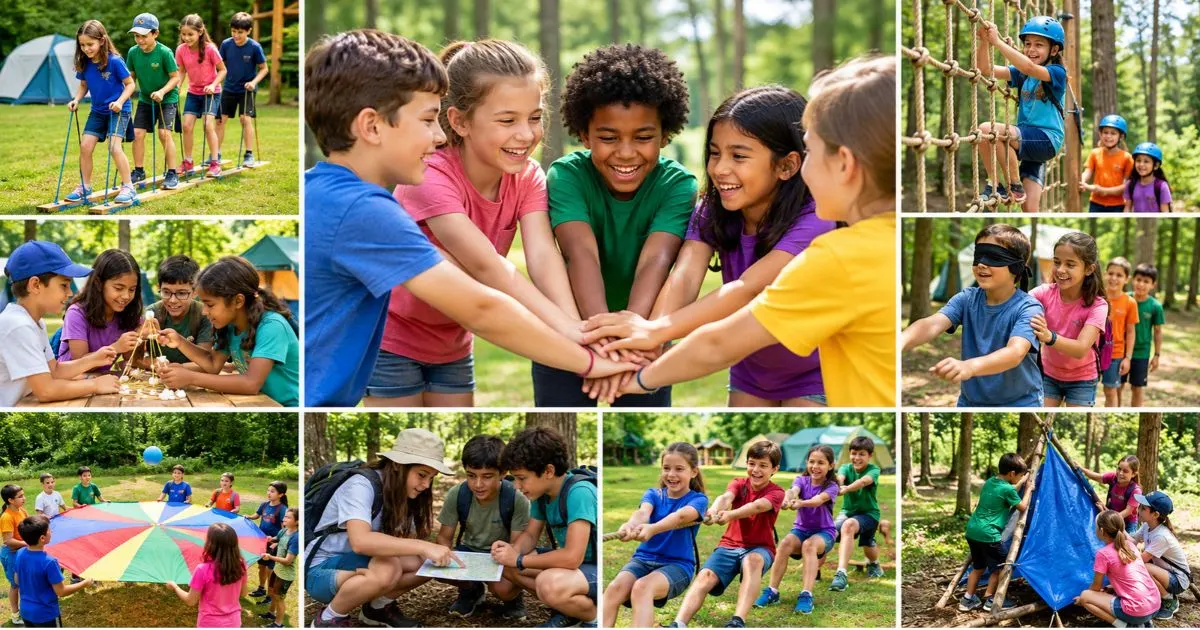
Summer camp is about much more than outdoor adventures, new friendships, and exciting games. It is also an opportunity for children to discover how to cooperate, express their ideas, solve problems, and support one another. However, helping a group of children become a team does not always happen naturally. Some children enjoy taking the lead, while others prefer to observe quietly before participating.
That is precisely where team building activities can make a difference.
Through carefully chosen games and shared challenges, children can learn to listen patiently, respect different opinions, divide responsibilities, and celebrate group achievements. Moreover, these experiences help campers understand that success does not always depend on being the fastest or strongest person. Instead, a team often succeeds when everyone contributes in their own way.
Whether you are organizing a day camp, a week-long summer program, an outdoor adventure camp, or a classroom-based holiday club, the following 41 team building activities offer practical ways to bring children together. Best of all, many require only everyday supplies, while several can be organized without any special equipment.
What Makes a Good Summer Camp Team Building Activity?
Before choosing a game, consider what you want children to learn. Although some activities focus on communication, others encourage creative thinking, cooperation, patience, or shared decision-making.
A successful activity should:
- Give every child a meaningful way to participate.
- Encourage cooperation rather than unnecessary competition.
- Include simple instructions that children can understand.
- Allow children with different abilities to contribute.
- Offer an achievable challenge without creating excessive frustration.
- End with a short conversation about what the group learned.
Additionally, remember that children have different comfort levels. Therefore, offer alternative roles, avoid forcing physical contact, and allow campers to participate through speaking, drawing, organizing, observing, or demonstrating.
Outdoor Team Building Activities
Outdoor games are particularly useful during summer camp because they combine movement, fresh air, and opportunities to practice teamwork. Nevertheless, choose shaded areas when possible and provide regular water breaks during hot weather.
1. The Team Treasure Trail
Best for: Ages 5–12
Time: 20–30 minutes
Materials: Picture clues, paper, pencils, and small tokens
Turn the campsite into a collaborative treasure-hunting adventure. First, divide the campers into small groups and give each group a starting clue. Each clue leads to another location, where the team must complete a simple cooperative challenge before moving forward.
For example, children might arrange picture cards in the correct order, solve a basic riddle, or identify three objects that share a characteristic.
Rather than allowing one child to solve every clue, assign rotating roles such as clue reader, idea collector, materials keeper, and answer presenter.
Teamwork lesson: Children learn that combining different ideas can help a group solve problems more effectively.
Make it inclusive: Use pictures, spoken clues, large-print cards, and accessible routes. The treasure can be a shared certificate or team celebration rather than a prize for the fastest group.
2. The Human Shape Challenge
Best for: Ages 6–12
Time: 10–15 minutes
Materials: None
Ask each group to create a simple shape, letter, or symbol using their positions in an open space. For instance, they might form a circle, a star outline, or the first letter of their camp’s name.
To begin, give everyone a few minutes to discuss their arrangement. Next, ask the group to create the shape together without pushing, pulling, or lifting anyone.
For an additional challenge, introduce a new shape and encourage the children to improve their communication before attempting it.
Teamwork lesson: This game encourages planning, spatial awareness, listening, and shared decision-making.
Make it inclusive: Children who prefer not to move into a formation can direct the arrangement, hold a symbol card, or suggest adjustments.
3. The Island Hopping Challenge
Best for: Ages 6–12
Time: 15–20 minutes
Materials: Large floor markers, flat hoops, or non-slip mats
Imagine that the group must cross a pretend river by stepping only on designated islands. Place several safe markers along a clear, level route and ask campers to work out how everyone can reach the other side.
The challenge is not to race. Instead, children must discuss the order of movement and ensure that every participant has a workable route.
After the first attempt, invite the team to explain what worked well and what they would change.
Teamwork lesson: Campers practice planning, patience, and helping others succeed.
Safety note: Use stable, non-slip markers on level ground. Do not use elevated platforms, unstable objects, or actual water crossings.
4. The Nature Pattern Hunt
Best for: Ages 5–10
Time: 15–20 minutes
Materials: Observation sheets and pencils
Take children on a short walk around a safe outdoor area. Rather than collecting natural objects, ask each team to find examples of different patterns in nature.
For instance, they might observe a leaf with visible veins, a flower with repeated petals, a branching tree, or a pattern of shadows.
Next, the team records its observations through drawings, descriptions, or photographs if permitted.
Teamwork lesson: Children learn to share discoveries, notice details, and value each person’s observations.
Make it inclusive: Offer seated observation points and picture-based recording sheets. Remind campers to leave plants, insects, and other natural objects undisturbed.
5. The Circle Pass Challenge
Best for: Ages 5–11
Time: 10–15 minutes
Materials: A soft ball or fabric beanbag
Ask the children to stand or sit in a circle and pass a soft object around the group. Begin with a simple rule: each camper must pass the object to someone who has not yet received it during that round.
Once everyone understands the process, challenge the group to complete the sequence smoothly without dropping the object.
Then introduce a second round in which campers must say the recipient’s name, point toward them, or use another agreed-upon signal before passing.
Teamwork lesson: Children practice attention, turn-taking, and coordination.
Make it inclusive: Allow rolling, gentle tossing, hand-to-hand passing, or another accessible method.
6. The Giant Group Mural
Best for: Ages 5–14
Time: 25–40 minutes
Materials: Large paper, washable markers, crayons, or paint
Give the group one large sheet of paper and a shared theme, such as “Our Dream Summer Camp” or “A World Where Everyone Belongs.”
Instead of giving every child a separate page, encourage them to create one connected picture. Some might draw the background, others could add characters, and others could design signs, buildings, or decorative patterns.
However, let the children negotiate their roles rather than assigning every task yourself.
Teamwork lesson: Campers discover how individual contributions can combine into a meaningful shared project.
Make it inclusive: Provide different drawing tools and allow children to contribute through dictation, sticker placement, coloring, or design suggestions.
7. The Water Relay Without the Race
Best for: Ages 6–12
Time: 15–20 minutes
Materials: Small cups, two containers per team, and water
On a warm day, organize a cooperative water-transfer challenge in a shaded outdoor area. Place a water container at the starting point and an empty container at the destination.
Each child transfers a small amount of water using a cup or another suitable container. The group continues until it reaches a shared fill line.
Instead of rewarding the team that finishes first, ask each group to estimate how much water it needs, distribute turns fairly, and adjust its method if too much water spills.
Teamwork lesson: Children practice resource management, coordination, and shared responsibility.
Safety note: Keep the activity away from slippery surfaces, drains, and electrical equipment. Use clean water and do not allow children to drink from shared game containers.
8. The Follow-the-Leader Switch
Best for: Ages 5–10
Time: 10–15 minutes
Materials: None
Begin with one volunteer leading a sequence of simple movements, such as clapping, tapping knees, stretching arms, or taking a few steps.
After a short turn, switch leaders so that several children get an opportunity to guide the group.
Gradually make the activity more collaborative by asking the next leader to include a movement suggested by another camper.
Teamwork lesson: Children experience both leadership and cooperation while learning that a good leader makes room for other voices.
Make it inclusive: Every movement can be adapted to seated positions or performed using hand gestures, facial expressions, or sound.
9. The Campground Design Challenge
Best for: Ages 8–14
Time: 25–35 minutes
Materials: Paper, pencils, and optional building blocks
Ask each team to design an imaginary summer camp that meets a set of shared requirements. For example, the camp must include sleeping areas, a play space, a quiet corner, drinking water access, and routes that everyone can use.
First, let campers brainstorm their ideas. Then, encourage them to agree on a layout and draw a simple map.
Finally, each group presents its design and explains how it considered the needs of different campers.
Teamwork lesson: This challenge develops planning, negotiation, empathy, and creative problem-solving.
Make it inclusive: Invite children to contribute through drawing, speaking, choosing symbols, or reviewing whether the design meets the group’s requirements.
10. The Team Shadow Story
Best for: Ages 6–12
Time: 15–20 minutes
Materials: Sunlight or a lamp, a clear wall or screen, and optional paper shapes
Ask children to work together to create a short story using shadows. One camper might suggest a setting, another could introduce a character, and a third could develop the problem the characters must solve.
Then, the group uses hand shapes or paper cutouts to illustrate important moments in the story.
For example, the story could follow a small bird searching for a safe place to rest, with different characters helping it along the way.
Teamwork lesson: Children learn to build on one another’s ideas and create something that no individual planned alone.
Make it inclusive: Campers can narrate, arrange shapes, suggest dialogue, or operate the light source with adult supervision.
Communication and Listening Activities
Good teamwork depends on more than completing a task. Children also need to explain their thoughts, listen carefully, ask questions, and recognize when someone else has a useful idea.
11. The Back-to-Back Drawing Game
Best for: Ages 7–12
Time: 15–20 minutes
Materials: Paper and pencils
Pair children and ask them to sit back-to-back. Give one camper a simple picture, such as a house, a tree, or a geometric arrangement.
Without showing the picture, the first child describes it while the second attempts to draw it.
Afterward, compare the drawings and discuss which instructions were helpful.
Then switch roles so that both children experience describing and interpreting information.
Teamwork lesson: Children discover why clear instructions, careful listening, and respectful questions matter.
12. The One-Word Story Circle
Best for: Ages 5–10
Time: 10–15 minutes
Materials: None
Invite campers to create a story together, with each person contributing one word at a time.
For example, the opening might be “One sunny morning,” followed by another child’s contribution of “our,” then “campers,” and so on.
At first, keep the story short and playful. Later, give the group a theme, such as solving a mystery or helping a lost animal.
Teamwork lesson: Every contribution affects the direction of the story, so children must listen to what came before rather than planning only their own part.
Helpful variation: Children who find spoken participation difficult may write their word on a card or choose from picture cards.
13. The Silent Sorting Challenge
Best for: Ages 6–12
Time: 10–15 minutes
Materials: Optional number or picture cards
Challenge the campers to arrange themselves according to a simple rule without speaking. They might sort themselves by birth month, the number of letters in their first names, or a number assigned to each child.
Before beginning, explain the permitted communication methods, such as pointing, gestures, or showing cards.
Once the group believes it has completed the task, allow everyone to speak and check the result together.
Teamwork lesson: Children explore nonverbal communication and learn that gestures can help people coordinate.
Make it inclusive: Avoid sorting by sensitive personal characteristics. Provide cards, communication boards, or other alternatives when gestures alone are difficult.
14. The Picture Description Puzzle
Best for: Ages 7–12
Time: 15–20 minutes
Materials: A simple picture and drawing supplies
Divide the children into small teams. One camper observes a picture for a short period and then describes it to the rest of the group without showing the original.
The other campers work together to recreate the image.
Afterward, compare the drawing with the original and identify which descriptions helped most.
To make the second round more challenging, include a few additional details in the picture.
Teamwork lesson: This activity encourages precise language, attentive listening, and constructive feedback.
15. The Appreciation Circle
Best for: Ages 5–14
Time: 10–15 minutes
Materials: None, or optional appreciation cards
Invite campers to sit or stand in a circle. Each child has the opportunity to share one positive observation about another person’s contribution to camp.
For example, a camper might say, “I liked how you helped us organize the art supplies,” or “You made sure everyone had a turn.”
If children do not know one another well yet, begin with observations about actions during a shared activity.
Teamwork lesson: Children learn to recognize helpful behavior and create a more welcoming group environment.
Important: Never require a child to give a public compliment if they feel uncomfortable. They may write a note, draw a picture, or pass.
16. The Question Builder
Best for: Ages 7–12
Time: 10–15 minutes
Materials: Question cards or paper slips
Give each team a mystery object, picture, or imaginary situation. Instead of guessing immediately, children must develop useful questions that help them understand it.
For example, if the mystery item is a compass, campers might ask what it is used for, where someone might carry it, and what information it provides.
After collecting their questions, the team discusses the answers and makes a final guess.
Teamwork lesson: Children practice curiosity, logical thinking, and asking for information before making assumptions.
17. The Instruction Swap
Best for: Ages 8–14
Time: 15–20 minutes
Materials: Building blocks or simple craft materials
Ask one child to build a small structure using blocks. Then, without showing the structure, that child gives instructions to teammates who must reproduce it.
After the first attempt, discuss whether the directions were clear enough. Next, switch the builder and repeat the challenge.
Gradually, encourage children to use more precise descriptions of position, size, and order.
Teamwork lesson: The activity helps children communicate clearly and improve their explanations when something is misunderstood.
18. The Team Interview
Best for: Ages 8–14
Time: 15–20 minutes
Materials: Paper and pencils
Pair campers who do not know each other very well. Give them a few friendly prompts, such as:
- What is one activity you enjoy?
- What is something you would like to learn?
- What makes a group activity fun for you?
- What is one way a teammate can help you?
Afterward, each child introduces their partner to a small group, sharing only information the partner is comfortable making public.
Teamwork lesson: Children discover shared interests, practice listening, and learn to introduce others respectfully.
Make it inclusive: Let children choose written answers, use communication aids, or decline questions they do not want to answer.
Problem-Solving and Creative Team Challenges
Sometimes the best way to develop teamwork is to give children a problem that cannot be solved easily by one person. Consequently, these activities encourage them to test ideas, divide tasks, and adjust their plans together.
19. The Paper Tower Challenge
Best for: Ages 7–14
Time: 20–25 minutes
Materials: Scrap paper and masking tape
Give each team the same quantity of paper and tape. Their goal is to build the tallest freestanding tower they can within a set time.
Before construction begins, encourage the group to sketch possible designs and discuss how the tower will remain balanced.
Once building starts, children can test different folding methods, strengthen weak areas, and reconsider their original plan.
Teamwork lesson: Campers practice experimentation, shared decision-making, and learning from mistakes.
Variation: Instead of measuring height, challenge teams to build the most stable tower or one that supports a lightweight paper object.
20. The Newspaper Bridge
Best for: Ages 8–14
Time: 20–30 minutes
Materials: Newspaper, masking tape, and two stable supports
Ask teams to build a small bridge between two stable supports using only newspaper and a limited amount of tape.
The bridge should span a short, safe gap and support a lightweight object, such as an empty paper cup.
First, let children discuss different designs. Next, they build and test their bridge under adult supervision.
Teamwork lesson: Children learn to combine ideas, divide responsibilities, and make improvements based on evidence.
Safety note: Never ask children to stand on the bridge or support human weight.
21. The Mystery Bag Invention
Best for: Ages 6–12
Time: 20–25 minutes
Materials: Bags containing safe craft materials
Prepare bags with assorted materials, such as cardboard, string, paper clips, paper, and reusable craft pieces.
Each team must invent something useful or imaginative using only the materials provided.
For instance, campers might create a pretend animal shelter, a tabletop game, or a device for moving a lightweight object.
After building, each group explains the purpose of its invention and how different members contributed.
Teamwork lesson: Children practice creativity, flexible thinking, and making use of limited resources.
Make it inclusive: Include materials that can be easily handled and provide alternatives to sharp, small, or potentially hazardous items.
22. The Marble Run Designers
Best for: Ages 7–12
Time: 20–30 minutes
Materials: Cardboard tubes, paper channels, tape, and large balls
Ask campers to design a route that carries a ball from a starting point to a target area.
Each child can take responsibility for one section, but the team must ensure that all sections connect properly.
During testing, the group observes where the ball stops or leaves the route. Subsequently, they adjust the angles, joins, and supports until the system works more reliably.
Teamwork lesson: Children discover how connected tasks require communication, testing, and cooperation.
Safety note: Use balls that are appropriate for the campers’ ages and avoid small marbles for young children because of choking risks.
23. The Rescue Mission Scenario
Best for: Ages 8–14
Time: 20–30 minutes
Materials: Scenario cards and paper
Present a fictional situation, such as helping a group of imaginary explorers prepare for a sudden rainstorm or planning how to reunite a lost toy with its owner.
Give each team a limited set of resources and several possible actions. The children must decide what to do first, what supplies they need, and how to share responsibilities.
Afterward, ask each group to explain its plan and identify any difficulties it considered.
Teamwork lesson: Campers develop prioritization, cooperation, and decision-making skills.
Important: Keep the scenario fictional and age-appropriate. Do not turn this into a real wilderness survival exercise or encourage children to handle emergencies without adults.
24. The Puzzle Piece Exchange
Best for: Ages 6–12
Time: 15–25 minutes
Materials: Several simple jigsaw puzzles
Give each team a puzzle, but secretly mix a few pieces between the different sets. Explain that the goal is for every group to complete its puzzle.
The children will eventually need to communicate with other teams, identify which pieces belong elsewhere, and negotiate fair exchanges.
Encourage them to ask politely rather than simply taking pieces.
Teamwork lesson: This activity shows that cooperation between groups can be more effective than treating everyone as a competitor.
Variation: Use homemade picture puzzles for younger children and more complex designs for older campers.
25. The Limited-Supplies Art Challenge
Best for: Ages 6–14
Time: 20–30 minutes
Materials: Shared craft materials
Give each team a small collection of art supplies and a theme, such as “a city of the future,” “an imaginary creature,” or “a place where everyone belongs.”
The group must agree on one final design and use the available materials to bring it to life.
However, introduce one additional rule: each child must contribute at least one idea before the team begins creating.
Teamwork lesson: Children learn to combine different perspectives, manage resources, and make room for quieter participants.
26. The Mystery Rule Game
Best for: Ages 7–12
Time: 15–20 minutes
Materials: Picture cards or everyday objects
Arrange a collection of objects or pictures according to a hidden rule. For example, you might group items by shape, material, function, or number of letters in their names.
The children must work together to identify the rule by suggesting categories and testing examples.
Once they discover the pattern, let each team invent its own mystery rule for another group to solve.
Teamwork lesson: Campers practice reasoning, explaining ideas, and revising assumptions when new evidence appears.
Cooperative Games for Friendship and Trust
A summer camp becomes more welcoming when children feel that their teammates respect them. Therefore, the following activities focus on shared achievements, fair participation, and positive group relationships.
27. The Compliment Card Exchange
Best for: Ages 6–14
Time: 10–15 minutes
Materials: Small cards, pencils, and crayons
Give each camper a card and invite them to write or draw a kind message for another child.
To keep the activity meaningful, suggest messages about actions, interests, or contributions rather than appearance.
For example, children might recognize someone’s patience, creativity, helpfulness, or willingness to include others.
Afterward, distribute the cards privately or let children exchange them in a relaxed setting.
Teamwork lesson: Campers practice noticing positive qualities and expressing appreciation.
Helpful variation: Allow anonymous cards, teacher-assisted writing, or the option to keep a message private.
28. The Common Ground Challenge
Best for: Ages 7–14
Time: 15–20 minutes
Materials: Paper and pencils
Divide campers into small groups and ask them to discover five things they all have in common.
Encourage them to go beyond obvious answers. Instead of simply listing that everyone attends camp, they might discover shared interests in drawing, animals, puzzles, or particular outdoor activities.
Each group then shares its discoveries with the larger camp.
Teamwork lesson: Children realize that people who seem different may still share many interests and experiences.
Important: Keep questions voluntary and avoid sensitive subjects such as family circumstances, finances, religion, or health.
29. The Team Mascot Project
Best for: Ages 5–12
Time: 20–30 minutes
Materials: Paper, markers, and optional recycled craft materials
Ask each team to invent a mascot that represents the group’s shared values.
First, children suggest possible animals, characters, colors, and symbols. Next, they agree on a design and create a drawing or simple craft.
Finally, the group chooses a name and explains what its mascot represents, such as kindness, curiosity, persistence, or cooperation.
Teamwork lesson: Campers practice reaching agreement and building a shared identity without excluding individual ideas.
Best for: Ages 6–14
Time: 10–15 minutes, followed by brief daily check-ins
Materials: A jar or box, paper slips, and pencils
Introduce a group goal that encourages positive behavior, such as making sure everyone has an opportunity to contribute to an activity.
Whenever campers notice an example of cooperation, invite them to write or draw it on a slip and place it in the jar.
At the end of the day, read a few examples aloud, with permission where appropriate.
Teamwork lesson: Children learn to recognize helpful actions and understand that group culture develops through everyday choices.
Tip: Reward participation and effort rather than counting mistakes or using the jar to shame individual children.
31. The Friendship Web
Best for: Ages 6–12
Time: 10–15 minutes
Materials: A soft ball of yarn or string
Ask campers to sit in a circle. One child holds the end of the yarn, shares something positive about teamwork, and gently passes or rolls the ball to another participant while keeping hold of the strand.
The next child contributes another idea before passing the yarn onward.
As the activity continues, a web forms in the middle of the circle.
Use the finished web to discuss how each person contributes to a connected group.
Teamwork lesson: The visual web represents the relationships and shared responsibilities that help a community work well.
Safety note: Keep the yarn away from necks and faces, avoid wrapping it around bodies, and supervise the activity closely. Offer a paper-based version if needed.
32. The Kindness Mission
Best for: Ages 5–14
Time: 15–30 minutes
Materials: Mission cards
Prepare simple, positive missions that campers complete together. Examples include welcoming a new participant, organizing shared art supplies, creating a thank-you message for camp staff, or helping prepare a common activity space.
Let each team choose a mission that is suitable for its members.
After completing it, ask the children to explain how they divided the work and how their actions benefited someone else.
Teamwork lesson: Campers connect cooperation with real acts of consideration and responsibility.
Make it meaningful: Avoid turning kindness into a competition. The purpose is to help others, not to collect the largest number of missions.
Indoor Team Building Activities for Hot or Rainy Days
Outdoor plans sometimes need to change because of heat, rain, or other conditions. Fortunately, indoor games can offer equally valuable opportunities for teamwork without requiring a large space.
33. The Cup Stack Challenge
Best for: Ages 6–12
Time: 15–20 minutes
Materials: Lightweight reusable cups and string
Place a collection of lightweight cups on a table. Give each team a simple tool made from string attached to a suitable cup-gripping mechanism, or use an adult-prepared, safe cup-moving device.
The children must work together to stack the cups without directly touching the cups with their hands.
They will need to coordinate their movements, communicate clearly, and adjust their actions when the structure becomes unstable.
Teamwork lesson: The game encourages patience, precise communication, and shared problem-solving.
Make it simpler: Let younger children stack cups by hand while taking turns following a group plan.
34. The Indoor Obstacle Route
Best for: Ages 5–12
Time: 15–25 minutes
Materials: Soft floor markers, cushions, and chairs
Create a simple route through a clear indoor space using soft markers and stable furniture.
Instead of timing individual campers, ask teams to plan how every member can complete the route safely. One child might suggest the sequence, another can demonstrate the directions, and another can help arrange the markers.
Allow campers to choose whether to walk, roll, point out the route, or take another accessible role.
Teamwork lesson: Children practice planning, encouragement, and adapting a shared activity to different needs.
Safety note: Avoid blindfolds, jumping from furniture, unstable obstacles, and routes that block exits.
35. The Cooperative Board Game Remix
Best for: Ages 6–12
Time: 15–30 minutes
Materials: A familiar board game or homemade game board
Choose a simple game and modify the rules so the players work toward one shared goal.
For example, instead of eliminating players, the group might need to collect all the picture cards before reaching the finish square. Alternatively, each player could contribute one type of resource needed by the entire team.
After playing, ask the campers whether the cooperative version changed the way they made decisions.
Teamwork lesson: Children learn to consider group progress instead of focusing only on individual success.
36. The Group Rhythm Orchestra
Best for: Ages 5–14
Time: 10–20 minutes
Materials: None or safe classroom percussion instruments
Ask the group to create a short musical performance using claps, finger taps, gentle foot movements, humming, or instruments.
Begin with one simple rhythm and invite each camper to contribute an additional sound or pattern.
Then, choose a conductor who signals when the group should start, stop, become quieter, or change tempo. Rotate the conductor so several children can lead.
Teamwork lesson: Campers practice listening, timing, cooperation, and respectful leadership.
Make it inclusive: Offer quiet alternatives for children sensitive to noise, and allow them to lead through visual signals or contribute a silent movement.
37. The Storyboard Team Challenge
Best for: Ages 7–14
Time: 20–30 minutes
Materials: Paper, pencils, and crayons
Ask each team to create a short illustrated story with a beginning, a problem, and a solution.
To make the task collaborative, give different campers responsibility for suggesting the characters, choosing the setting, developing the challenge, and deciding how it ends.
However, require the group to agree on the final story before drawing the complete storyboard.
Once finished, campers can present their story through drawings, narration, or a short role-play.
Teamwork lesson: Children learn to organize ideas, negotiate creative differences, and turn separate contributions into one coherent result.
Best for: Ages 8–14
Time: 20–25 minutes
Materials: Paper, pencils, and optional food picture cards
Invite campers to invent a pretend snack or picnic menu for the group. Give them a set of imaginary ingredients, a budget of play money, and a few requirements, such as including different food groups or planning for several dietary preferences.
The team must discuss the choices, organize the menu, and explain why it works for the intended group.
For younger campers, use pictures instead of written ingredient lists.
Teamwork lesson: This activity builds negotiation, planning, and awareness of other people’s needs.
Important: Keep this a paper-based design challenge unless food preparation is separately planned and supervised with appropriate allergy and hygiene precautions.
Leadership and Responsibility Activities
Children benefit from opportunities to lead, but leadership should not always belong to the loudest or most confident camper. Accordingly, these activities rotate responsibility and encourage every child to contribute in a meaningful way.
39. The Rotating Team Captain
Best for: Ages 6–14
Time: 15–30 minutes
Materials: Optional captain cards
During a group activity, appoint one child as the team captain for a short period. The captain’s job is to invite suggestions, help the group agree on a plan, and check that everyone has an opportunity to contribute.
After a few minutes, transfer the role to another camper.
Before the activity ends, ask children to reflect on what made their captains helpful.
Teamwork lesson: Campers learn that leadership involves listening, encouraging participation, and helping the group move forward rather than making every decision alone.
40. The Camp Jobs Collaboration
Best for: Ages 5–14
Time: 10–20 minutes per task
Materials: Job cards or a simple responsibility chart
Create a list of small, age-appropriate camp responsibilities, such as organizing craft supplies, arranging books, checking that game pieces are returned, or preparing materials for the next activity.
Let campers choose or rotate jobs so that responsibilities are shared fairly.
For larger tasks, create small teams and encourage them to decide who will handle each part.
At the end, briefly discuss how each responsibility contributed to the success of the group.
Teamwork lesson: Children discover that behind every successful group activity are people carrying out different, equally useful tasks.
Safety note: Keep responsibilities appropriate to children’s ages. Adults should retain responsibility for supervision, medication, food safety, cleaning chemicals, and other safety-critical duties.
41. The Dream Camp Planning Project
Best for: Ages 8–14
Time: 30–45 minutes
Materials: Paper, markers, and optional craft materials
Finish your team building program with a project that allows campers to put several skills into practice.
Ask each team to plan an imaginary summer camp day. They must select activities, create a timetable, decide how to share responsibilities, include quiet breaks, and make sure the schedule considers children with different interests and abilities.
Encourage teams to explain how they handled disagreements and why they selected their final plan.
Finally, invite the groups to present their schedules and identify one idea they would borrow from another team.
Teamwork lesson: This project brings together communication, planning, leadership, empathy, creativity, and shared decision-making.
Optional extension: Let campers vote on a few feasible activities to include in a real camp day, while adults make the final decisions about safety, resources, and scheduling.
How to Choose the Right Team Building Activities for Different Ages
Not every game works equally well for every age group. Therefore, adjust the complexity, duration, instructions, and level of adult support to suit your campers.
| Age group | Activities to prioritize | Helpful adjustments |
|---|---|---|
| Ages 4–6 | Circle Pass, Group Rhythm Orchestra, Human Shape Challenge | Use short instructions, visual demonstrations, and frequent breaks. |
| Ages 7–9 | Treasure Trail, Picture Description Puzzle, Team Mascot Project | Offer clear roles, simple rules, and small-group challenges. |
| Ages 10–12 | Paper Tower, Puzzle Piece Exchange, Mystery Rule Game | Encourage independent planning, discussion, and testing. |
| Ages 13–14 | Campground Design, Rescue Mission Scenario, Dream Camp Planning | Add realistic constraints, more complex decisions, and rotating leadership. |
These are starting points rather than strict age limits. In practice, children’s interests, communication styles, prior experience, and support needs can matter just as much as their ages.
Team building activities can turn an ordinary summer camp day into an opportunity for children to learn, connect, and grow together. From outdoor treasure trails and creative construction challenges to appreciation circles and shared planning projects, each activity offers a different way to practice cooperation.