 by
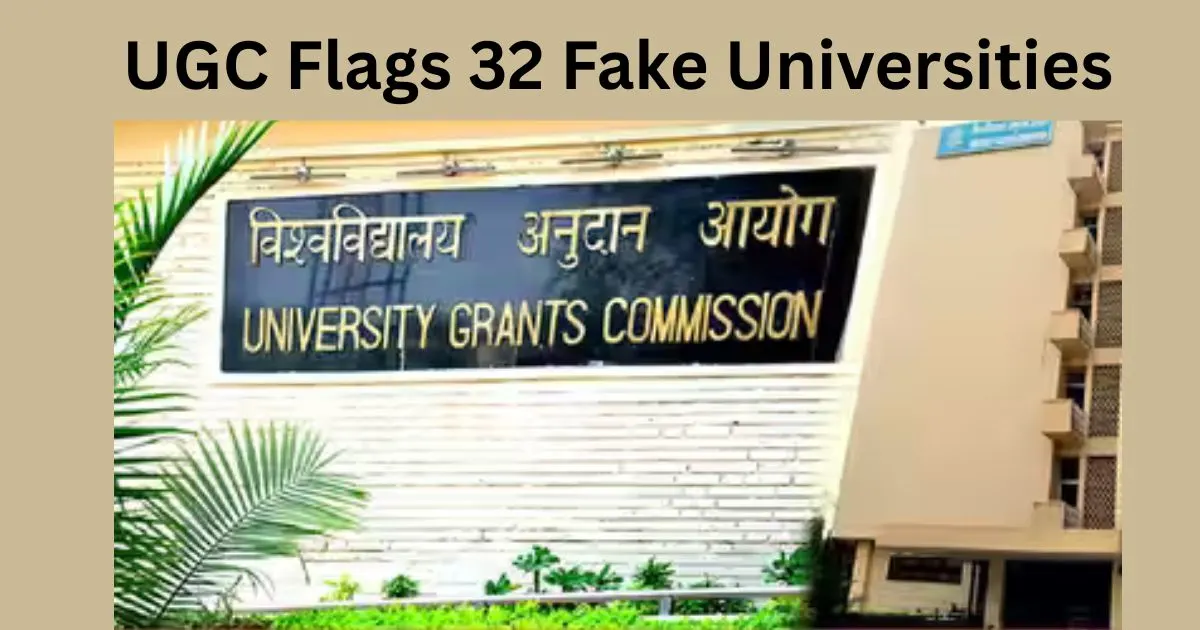
by The University Grants Commission (UGC) has issued a fresh warning to students and parents after identifying 32 fake universities operating across different parts of India. The advisory also highlights concerns over certain unauthorised EdTech partnerships that advertise degree and diploma programmes without the approval required under UGC regulations.
The warning was shared by the Union Government in Parliament, where it stressed that students must verify the recognition status of any university or online programme before taking admission. According to the UGC, degrees issued by fake universities have no legal validity and may not be accepted for employment, higher education, or government recruitment.
Government Raises Alarm Over Fake Universities
The Ministry of Education informed Parliament that the UGC’s latest list, published in February 2026, contains 32 institutions identified as fake universities. These institutions are not empowered under the UGC Act, 1956 to award academic degrees.
The government said that fake universities continue to mislead students through attractive advertisements, impressive names, and promises of recognised qualifications despite lacking legal authority to grant degrees.
UGC Warns Against Unauthorised EdTech Collaborations
Apart from fake universities, the UGC has expressed concern over certain EdTech companies that promote online and Open and Distance Learning (ODL) programmes through franchise arrangements with higher educational institutions.
According to the regulator:
- Franchise-based arrangements for awarding UGC-recognised degrees are not permitted.
- Students should not rely solely on advertisements or promotional claims.
- Programmes offered through unauthorised partnerships may not receive UGC recognition.
- Action can be taken against both defaulting EdTech companies and higher educational institutions that violate applicable regulations.
Why Fake Degrees Can Create Serious Problems
A degree obtained from an institution that is not authorised to award degrees can have long-term consequences.
Employment Issues
Many government departments, public sector organisations, and private employers verify whether a university is recognised by the UGC. Degrees from fake institutions may be rejected during recruitment.
Higher Education Challenges
Students seeking admission to postgraduate courses or professional programmes may discover that their previous qualification is not accepted because it was issued by an unrecognised institution.
Financial and Academic Loss
Apart from losing tuition fees, students may spend several years pursuing a qualification that carries no academic value.
How the UGC Identifies Fake Universities
The Commission follows a structured process whenever it receives complaints about an institution claiming to award degrees without authority.
Initial Notice
The institution is issued a notice asking it to explain its legal status and authority to grant degrees.
Examination of Response
The explanation provided by the institution is examined by the UGC.
Inclusion in the Fake University List
If the response is found to be unsatisfactory and the institution is operating without legal authority, its name is added to the UGC’s official list of fake universities.
Anti-Malpractice Cell Continues Monitoring Violations
To tackle fraudulent higher education institutions, the UGC operates an Anti-Malpractice Cell (AMPC).
The Cell monitors complaints relating to:
- Fake universities
- Unrecognised educational institutions
- Illegal award of degrees
- Violations of the UGC Act, 1956
The AMPC also coordinates with state governments and other authorities to address complaints and monitor compliance.
Steps Taken by the UGC to Protect Students
The Commission has introduced several measures to reduce the spread of fake educational institutions.
Public Notices
The UGC regularly publishes public advisories warning students against fake universities and invalid degree programmes.
Updated Fake University List
A state-wise list of fake universities is periodically updated and made publicly available to help students verify institutions before applying.
Show Cause and Warning Notices
Institutions suspected of awarding invalid degrees receive notices seeking clarification and directing them to comply with legal requirements.
Coordination with States
State Governments and Union Territories are requested to initiate legal action against fake institutions operating within their jurisdictions, including lodging FIRs where necessary.
States Where Fake Universities Have Been Identified
According to the latest UGC list, fake universities have been identified in several states and Union Territories, including:
- Delhi
- Uttar Pradesh
- Andhra Pradesh
- Karnataka
- Maharashtra
- West Bengal
- Kerala
- Odisha
- Puducherry
- Rajasthan
- Haryana
- Jharkhand
- Arunachal Pradesh
Delhi continues to have the highest number of institutions included in the latest list.
How Students Can Verify a University’s Recognition
Before paying admission fees or submitting original documents, students should:
Check UGC Recognition
Confirm that the university appears on the official UGC list of recognised universities.
Verify Online Programme Approval
If enrolling in an online or distance learning programme, verify that the course is approved under the relevant UGC framework.
Avoid Franchise Claims
Be cautious if an institute claims to offer degrees through study centres or franchise partners without clear regulatory approval.
Confirm Professional Approvals
Where applicable, check approvals from relevant professional regulators for specialised programmes in fields such as engineering, law, pharmacy, or teacher education.
Key Takeaway
The latest warning from the UGC serves as a reminder that students should verify every institution before taking admission. Attractive advertisements, placement promises, or claims of university partnerships should never replace official verification. Choosing a recognised university helps protect students from invalid degrees, financial loss, and future career complications while ensuring that their qualifications remain legally valid across India.